
$174 Million in Savings, Unspent: Maui County Budget Reveals a Tension Between Prudence and Need
A $174 million surplus sits in Maui County coffers, even as the proposed fiscal year 2027 budget – a $1.616 billion plan representing a 3.7% increase over the current $1.558 billion – faces scrutiny for its reliance on continued, and potentially volatile, revenue streams. This figure, revealed during Wednesday’s opening of budget deliberations by the County Council’s Budget, Finance and Economic Development Committee, isn’t simply a sign of fiscal health; it underscores a fundamental question about the county’s priorities and its ability to effectively allocate resources in a period of economic uncertainty. Follow the money, and a clear picture emerges: Maui County is collecting more than it’s spending, yet simultaneously proposing a larger budget with 90 new positions while grappling with over 90 existing vacancies.
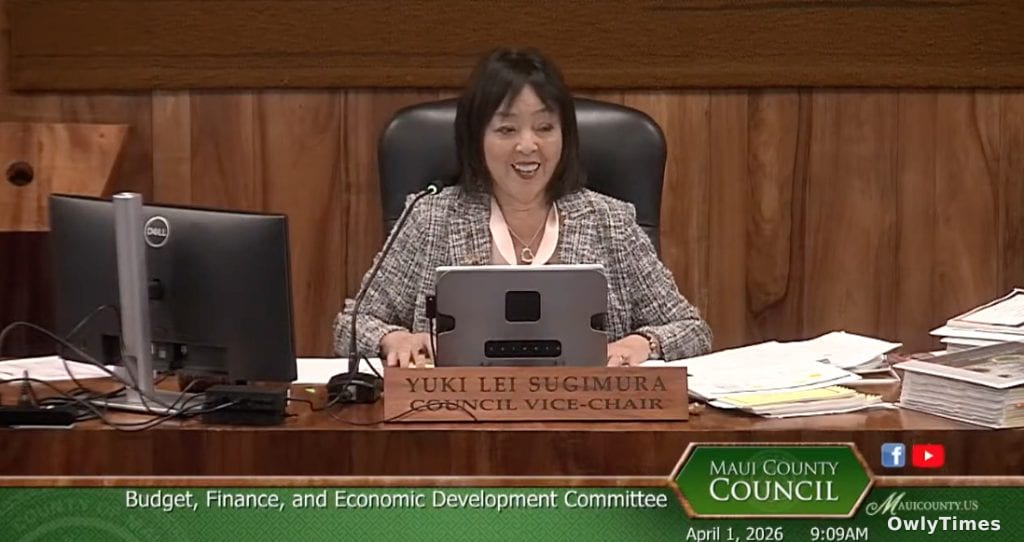
The proposed budget breakdown allocates $1.245 billion for operations and $371.1 million for capital improvements. While Budget Committee Chair Yuki Lei Sugimura acknowledged “a lot of work” ahead, the core debate quickly centered on the unspent funds and the justification for expansion amidst existing staffing gaps. Council Member Nohelani Uʻu-Hodgins directly challenged the administration, questioning whether vacant positions were being re-evaluated before adding new ones, asking, “Do we ever look at our vacancies and say, ‘OK, maybe we don’t need this one anymore?’” This isn’t merely a question of efficiency; it’s a reflection of a broader concern about responsible spending, particularly given the economic headwinds facing the islands.
Source material: mauinow.com.
The administration, led by Budget Director Lesley Milner, defended the proposed expansion positions, citing departmental growth and the need for roles that don’t currently exist. However, this explanation clashes with the reality of the significant carryover savings. While Milner stated the administration is “trying to look at all available options to try and cut down on our vacancies,” the sheer size of the surplus suggests a more fundamental disconnect between revenue collection and service delivery. The county is, in effect, taxing residents for services it isn’t fully providing, as highlighted by Council Member Kauanoe Batangan, who calculated that roughly $75 million of the surplus represents taxes collected for undelivered goods and services.
A significant portion of the $174 million surplus stems from “unanticipated revenue,” including transient accommodations tax (TAT) income and investment returns. While Milner expressed optimism about continued revenue growth, acknowledging “a few good years,” she also conceded that county investments are “unreliable,” and cautioned, “Let’s hope that continues and hopefully our nation doesn’t spiral into a crazy recession.” This admission reveals a precarious reliance on external factors, a vulnerability underscored by University of Hawaiʻi economist Carl Bonham’s recent warning about Maui County’s exposure to federal and global uncertainties, a stagnant job market, and dependence on high-spending tourists. The county’s financial stability is, therefore, far from guaranteed.
Beyond the surplus, the budget also reveals a planned 9% increase in property taxes for short-term transient vacation rentals valued over $3 million, intended to offset declining property values. This move, while seemingly aimed at revenue stabilization, highlights a broader tension between catering to the tourism industry – a major economic driver – and addressing the needs of long-term residents. Department of Finance Director Marcy Martin acknowledged the increase won’t fully compensate for the value decline, meaning overall tax revenue from this sector will still likely decrease. This illustrates a difficult balancing act: attempting to maintain revenue levels while acknowledging the economic realities impacting property owners.
Furthermore, an audit revealed two “material weaknesses” and one “significant deficiency” in Maui County’s financial controls, all repeat findings from the previous year. These relate to the TAT system, financial reporting, and capital asset controls. While the administration claims to be addressing these issues – including implementing a new TAT software system – the persistence of these weaknesses raises concerns about the county’s ability to effectively manage its finances and ensure accountability. This isn’t simply a technical issue; it’s a matter of public trust and responsible stewardship of taxpayer dollars.
What this means for your wallet: Maui County residents should expect continued scrutiny of property tax rates and potential increases in fees for services as the county attempts to balance its budget and address its financial vulnerabilities. The $174 million surplus offers an opportunity for tax relief or investment in critical infrastructure, but its ultimate allocation will depend on the Council’s ability to prioritize spending and address the underlying issues of vacant positions and unreliable revenue streams. The key question for residents is this: will the County Council prioritize spending on new initiatives, or will they focus on maximizing the value of existing resources and providing tangible benefits to the community through tax relief or improved services?