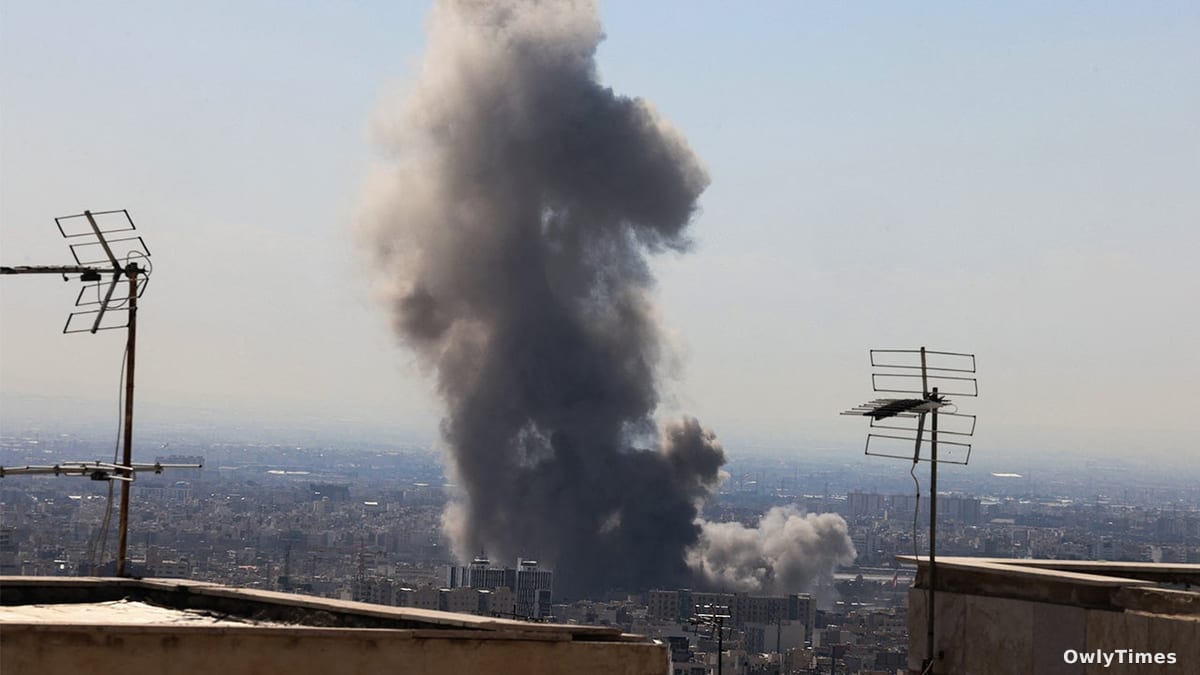

The joint U.S.-Israeli military offensive, codenamed "Operation Epic Fury," culminating in the elimination of Iranian Supreme Leader Ayatollah Ali Khamenei, represents a strategic gambit of immense proportions. The immediate calculus appears to be a decisive decapitation strike against the core of Iran's leadership and military infrastructure, aimed at fundamentally altering the balance of power in the Middle East and potentially catalyzing internal regime change. Proponents, including Israeli President Isaac Herzog, have hailed it as a "historic moment," suggesting that President Donald Trump’s administration has finally confronted a regime that has "spent billions of dollars every year simply to kill others." Yet, the reverberations across global markets and geopolitical fault lines suggest that while the immediate target has been hit, the broader strategic landscape has been plunged into a volatile state of flux, where the costs are rapidly mounting and the long-term benefits remain highly uncertain.
The Immediate Costs of a Decisive Blow
The initial hours following Khamenei’s death saw a rapid escalation that quickly revealed the operation’s complex and costly fallout. The U.S. Central Command (CENTCOM) confirmed three American servicemembers killed in action and five seriously wounded amidst Iranian retaliation, a stark reminder of the human cost President Trump acknowledged when he stated, "We expect casualties with something like this." Iran’s Secretary of the Supreme National Security Council, Ali Larijani, swiftly accused Trump of turning "America First" into "Israel First," asserting Tehran "will not negotiate with the United States" and pledging to target regional bases used by the U.S. military, labeling them "American soil." This defiant rhetoric was matched by actions, as Iranian airstrikes killed at least eight Israelis in Beit Shemesh, and a suspected drone strike hit Britain’s RAF Akrotiri base in Cyprus, prompting a defensive response from a Royal Air Force Typhoon operating out of Qatar.
Based on the original Fox News report.
Economically, the impact was immediate and global. Oil prices surged, with global benchmark Brent crude briefly jumping to $82.37 a barrel, its highest level since January 2025, and U.S. West Texas Intermediate crude climbing to $71.68 after briefly hitting $75.33. Analysts at Citi warned that prices could climb further, projecting Brent to trade between $80 and $90 a barrel if the conflict persists. This financial turbulence highlights a critical vulnerability: who loses from this instability extends far beyond the immediate belligerents, impacting global consumers and supply chains, reminiscent of past oil shocks during periods of Middle Eastern conflict.
Cracks in the Facade, and What Lies Beneath
While the physical strikes targeted Iran’s military infrastructure, including ballistic missile systems, drone capabilities, and the "heart of Tehran," the psychological impact on the Iranian regime and its populace is also a key dimension. Iranian-American communications strategist Sarah Raviani observed that for the first time in 47 years, "the illusion of permanence crack[ed] within the regime," signaling a potential "historic opening" for Iranians demanding freedom. This sentiment was echoed by Sen. John Fetterman (D-Pa.), who praised the operation and suggested that "tens of millions of people in Iran are absolutely celebrating."
However, the regime’s resilience and contingency planning should not be underestimated. Former Secretary of State Mike Pompeo noted that Iran’s leadership "prepared for this," having a "structure that said if the following folks are gone, here’s how we will operate." Indeed, despite claims by Iranian Foreign Minister Abbas Araghchi that attacks on Gulf states were not ordered by national leadership and were the actions of "isolated" military units operating off "prior instructions," the retaliatory strikes demonstrate a continued, albeit potentially fragmented, capacity for projection. This internal dynamic presents a complex challenge: a weakened but still dangerous regime, potentially operating with less centralized control, could be even more unpredictable. The question of who truly benefits from this internal fracturing—the Iranian people seeking change, or hardline factions solidifying power—remains open.
A Widening Arc of Instability and Domestic Concerns
The regional reverberations extend beyond direct military engagement. Israel issued an urgent evacuation order for villages in southern Lebanon, anticipating further strikes against Hezbollah, which the Israel Defense Forces (IDF) say is acting on behalf of the Iranian regime. This opens a dangerous new front, drawing in another non-state actor with significant regional reach. Meanwhile, the U.S. and several Gulf allies—Bahrain, Jordan, Kuwait, Qatar, Saudi Arabia, and the United Arab Emirates—issued a joint statement condemning Iran’s "indiscriminate and reckless" attacks, signaling a unified front and a potential willingness by the Gulf Cooperation Council to consider offensive military action. This alignment highlights a shift in power dynamics, where shared concerns about Iranian aggression forge new, robust alliances, contrasting sharply with Russia's condemnation of Khamenei's killing as a "cynical violation" of international law.
Domestically, the U.S. faces heightened security concerns. Former Acting DHS Secretary Chad Wolf warned of potential retaliatory threats within the homeland, including cyberattacks, sleeper cells, and radicalized lone actors. This was tragically underscored by the shooting in Austin, Texas, where suspect Ndiaga Diagne, a naturalized U.S. citizen born in Senegal, wore an Iranian flag shirt and "Property of Allah" sweatshirt, leading the FBI to investigate it as a "potentially an act of terrorism." Security measures were also tightened at the U.S. Capitol, reflecting an anticipated uptick in threat assessment, even without specific intelligence. These internal vulnerabilities demonstrate that the geopolitical conflict overseas can swiftly manifest as a domestic security challenge, adding another layer to the "who loses" equation.
The Next Chess Move
With Ayatollah Ali Khamenei gone and Iran’s internal leadership in flux, the immediate political chess move to watch is the succession process within the Islamic Republic. President Trump has stated that "new potential leadership in Iran has indicated they want to talk," and that he "does plan to talk with replacement Iranian leadership soon." However, the White House affirmed that "Operation Epic Fury continues unabated." The critical question is whether a new Iranian leadership will emerge that is willing to engage in meaningful negotiations, or if hardline elements will consolidate power, potentially leading to an even more confrontational stance. The world will be watching for any tangible signs of de-escalation from Tehran, or conversely, a doubling down on its aggressive posture as it navigates this unprecedented leadership vacuum. The next phase will determine whether this strategic gamble leads to a path towards regional stability or an even deeper, more protracted conflict.