
By James Chen, Business & Finance Correspondent, OwlyTimes
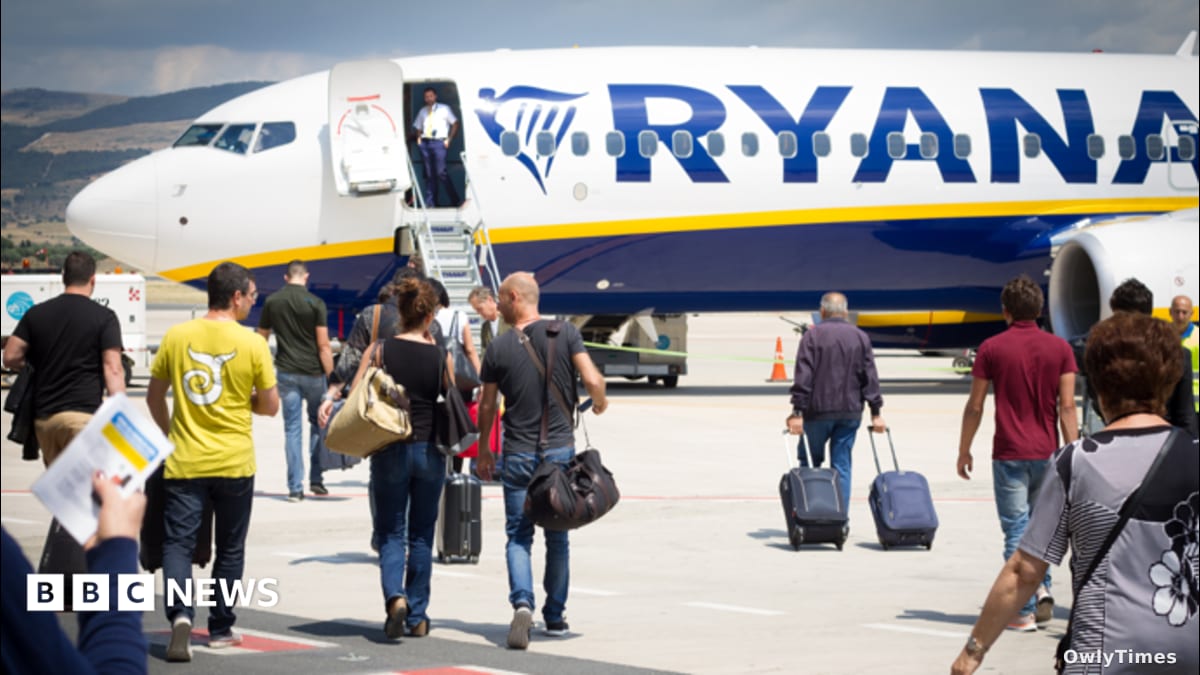
A 34% drop in first-quarter profits tells the entire story of how geopolitical instability can swiftly upend the economics of low-cost aviation. Ryanair, Europe’s largest budget carrier, reported a sharp decline in profitability for the April-to-June quarter of 2026, caught in a vice of soaring fuel costs and consumer hesitancy triggered by the ongoing conflict in the Middle East. Despite carrying more passengers, the airline was forced to slash ticket prices to fill seats, illustrating the fragile balance between volume and margin in a highly volatile operating environment.
Geopolitical Friction and the Fuel Cost Squeeze
To understand how Ryanair’s bottom line shrank while its planes remained full, we must follow the money. The primary catalyst for the profit squeeze was a surge in operating costs, which rose 11% to €3.81 billion. According to CNBC, this spike was driven by the 20% of Ryanair's jet fuel that remained unhedged, the cost of which more than doubled during the quarter. The International Air Travel Association's Jet Fuel Price Monitor showed that the average price of jet fuel surged to $127 per barrel for the week ending July 10, representing a 41% increase year-over-year.
This surge is directly linked to escalating hostilities between the US and Israel, and Iran. As the BBC reported, crude oil prices touched $90 a barrel following intense exchanges of fire and the subsequent halting of traffic through the critical Strait of Hormuz. Although The Guardian noted that Brent crude subsequently pared some gains to $89.07 a barrel due to ongoing diplomatic mediation between Washington and Tehran, the damage to airline cost structures was already done. Ryanair CEO Michael O'Leary emphasized that the company's conservative hedging policy—with its fiscal year 2027 fuel currently 80% hedged at $67 per barrel and 2028 fuel 15% hedged at $85 per barrel—still provides a cost advantage over weaker European competitors, but it could not fully insulate the carrier from unhedged price spikes.
Discounting Strategy Erodes Average Fares
The second half of the profit-squeeze equation lies in demand stimulation. While passenger numbers rose 6% to 6.1 million during the quarter—buoyed by an early Easter holiday in April—overall revenue only ticked up 1% to €4.4 billion. To keep load factors high amidst consumer hesitancy, Ryanair cut fares by 6%.
Aviation analyst John Strickland explained on CNBC that Ryanair relies on a "load factor active revenue passive approach." This business model prioritizes filling seats at discounted rates and recouping margins through ancillary spend, such as baggage fees or in-flight purchases, which typically account for 20% to 25% of the airline’s total revenues. However, with passengers delaying bookings closer to their departure dates, the airline had to discount more aggressively than anticipated. Chief Financial Officer Neil Sorahan confirmed that flights to popular Mediterranean destinations remained full, but noted that customers are simply "booking just a little bit later" due to anxiety surrounding regional stability and potential jet-fuel shortages.
To get a precise view of the damage, we must look at the diverging profit figures reported by different outlets. According to CNBC, Ryanair's profit after tax fell to €538 million ($615.3 million), down from €820 million in the same quarter last year. Meanwhile, the BBC reported that the carrier's pre-tax profits dropped to €593 million (£503 million).
Capital Strength and the Impending Winter Shakeout
Despite the immediate earnings hit, Ryanair's financial foundation remains exceptionally robust compared to the rest of the industry. Sorahan revealed that the airline paid down its final €1.2 billion bond in May, leaving the carrier effectively debt-free and in full ownership of its aircraft assets. This balance sheet strength is expected to become a key competitive weapon as the industry heads into the colder months.
Sorahan warned of an impending "shakeout in capacity," predicting that weaker European carriers without Ryanair's scale or hedging protections will face severe pressure and potential failures this winter if unhedged fuel prices remain elevated. Strickland echoed this sentiment, suggesting that the industry could see far more severe winter flight cancellations than in previous years.
Investor reaction on Monday reflected these mounting industry headwinds, though outlets reported slightly different figures. The BBC tracked a 5% drop in Ryanair's share price, while CNBC reported a sharper 6.8% slide. Russ Mould, investment director at AJ Bell, observed that while Ryanair is better positioned than its rivals, near-term visibility for the travel sector remains "worse than San Francisco airport when the fog sets in" without a lasting resolution in the Middle East.
Safety Concerns Add to Operational Headwinds
Adding to the company's challenging week, Ryanair had to publicly address a major in-flight safety scare. As reported by The Guardian, a 61-year-old passenger named Ljubisa Karović was nearly sucked headfirst out of a cabin window during a flight from Thessaloniki, Greece, to Memmingen, Germany. An engine failure caused debris to shatter an acrylic window, and Karović was only saved because his wife, Svetlana Grković, and two fellow passengers managed to hold onto his legs and pull him back inside.
Sorahan defended the crew's response, praising the pilots and cabin crew for safely returning the aircraft to Thessaloniki, where all passengers disembarked safely. While Sorahan stated it was "way too early" to discuss financial compensation for the family while an investigation is ongoing, the incident has drawn unwanted scrutiny to the carrier's operational safety at a time when consumer confidence is already fragile.
Market Outlook and Consumer Takeaways
For the average consumer, Ryanair’s current financial strategy translates directly into cheaper travel opportunities over the short term. Because the airline is committed to keeping its planes full despite geopolitical anxieties, summer fares for the key July-to-September quarter are trending modestly lower compared to last year. If you are willing to book closer to your departure date, you are highly likely to find discounted ticket prices as Ryanair continues to stimulate demand.
For retail investors, however, the takeaway is one of caution. Ryanair has declined to provide full-year profit guidance due to "zero visibility" for the second half of its financial year. While the airline's debt-free balance sheet and aggressive hedging structure protect it from catastrophic downside, its near-term earnings remain entirely at the mercy of unhedged fuel price volatility and the potential escalation of conflicts in Ukraine and the Middle East. Keep a close eye on Brent crude benchmarks and upcoming August-September booking volumes; those metrics will serve as the primary indicators of whether Ryanair can rebuild its margins or if the budget travel sector is headed for a turbulent winter.