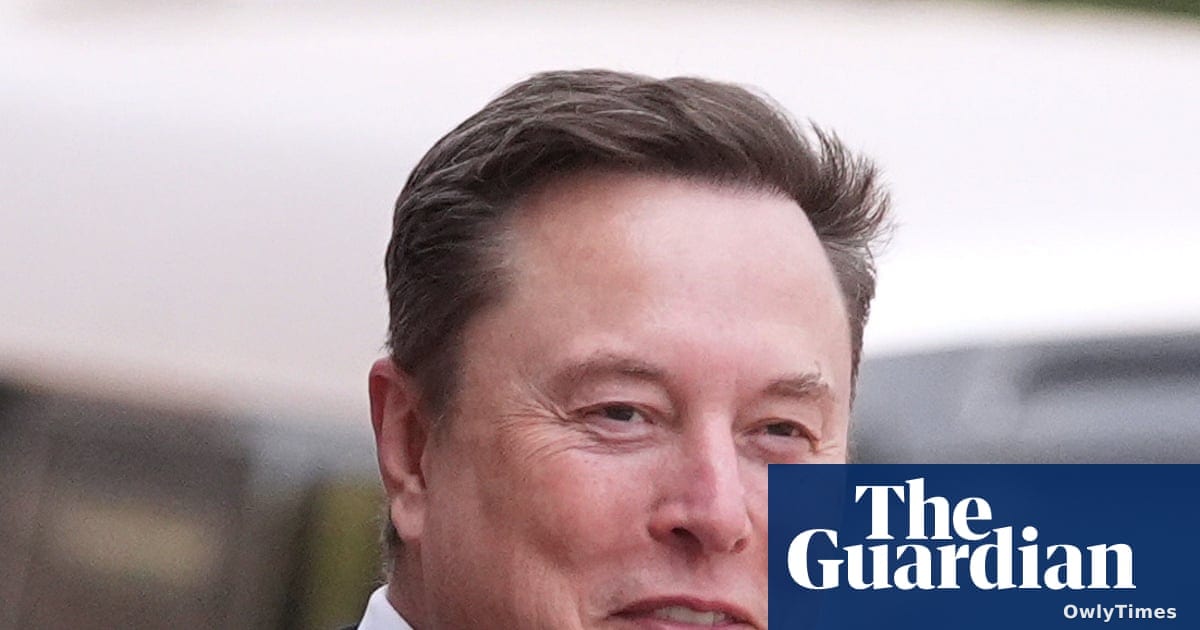

The $85.7 billion raised in the June 12 SpaceX initial public offering represents more than just a record-breaking capital infusion; it serves as a volatile nexus point where corporate valuation, political influence, and legislative scrutiny collide. While the listing propelled the company to a market capitalization exceeding $2 trillion and solidified Elon Musk as the world’s first trillionaire, the weeks surrounding the IPO reveal a complex ecosystem of investor behavior and social friction, according to reports from The Guardian, CNBC, and CBS News.
The Cost of Political Distraction
Follow the money and the attention, and a stark divergence emerges. In the two weeks leading up to the IPO, Musk’s focus appeared fixed on political discourse rather than his aerospace conglomerate. The Guardian reports that between May 31 and June 12, Musk posted 303 times regarding race and immigration—predominantly centered on UK politics—compared to just 114 posts regarding SpaceX. This activity drew public condemnation from UK Prime Minister Keir Starmer, who accused the CEO of "interfering" and "whipping up division." For investors, this pattern creates a reputational risk profile that is increasingly difficult to decouple from the company’s valuation, especially as The Guardian notes that Musk’s amplification of right-wing political figures contributed 64 million views to their content.
Legislative Ties and Market Sensitivity
The financial impact of the IPO has extended into the halls of Congress, where recent disclosures highlight the intersection of policy and personal investment. CNBC reports that Rep. Dan Meuser (R-Pa.) and Rep. Gil Cisneros (D-Calif.) have disclosed purchasing SpaceX stock shortly after the listing. Meuser’s dependent child acquired between $15,001 and $50,000 in shares on June 15, while Cisneros disclosed a purchase of between $1,001 and $15,000 on June 18. While both lawmakers maintain they are in compliance with the STOCK Act, their committee assignments—Financial Services for Meuser and Armed Services for Cisneros—make these trades particularly sensitive given that the Department of Defense remains a primary SpaceX customer.
Local Economic Realities
Beyond the ticker symbol, the company’s physical expansion in Starbase, Texas, has fundamentally altered the Rio Grande Valley’s economic landscape. CBS News notes that the average home price in Brownsville has surged to $196,920 in 2026, a nearly 75% increase from $112,705 in 2018. While local business owners like Marco Colorado and Mikael Hinojosa cite increased tourism and spending as a direct benefit, critics point to a widening wealth gap. CBS News highlights that environmental groups and local residents are raising concerns over debris, wildlife disruption, and the displacement of families who have occupied the region for generations.
Investor and Consumer Takeaway
For the retail investor, the SpaceX IPO acts as a bellwether for a broader wave of pending tech listings, including potential moves by Anthropic and OpenAI. However, the current data suggests the stock is subject to significant volatility; after opening at $150 per share, the stock closed at $162 as of early July, though it remains roughly 20% below its June 16 peak of $201.80, according to CNBC. Investors should monitor the upcoming wave of congressional financial disclosures, which are expected to reveal further ownership stakes by federal officials, potentially accelerating the legislative momentum for a long-discussed ban on individual stock trading by members of Congress.