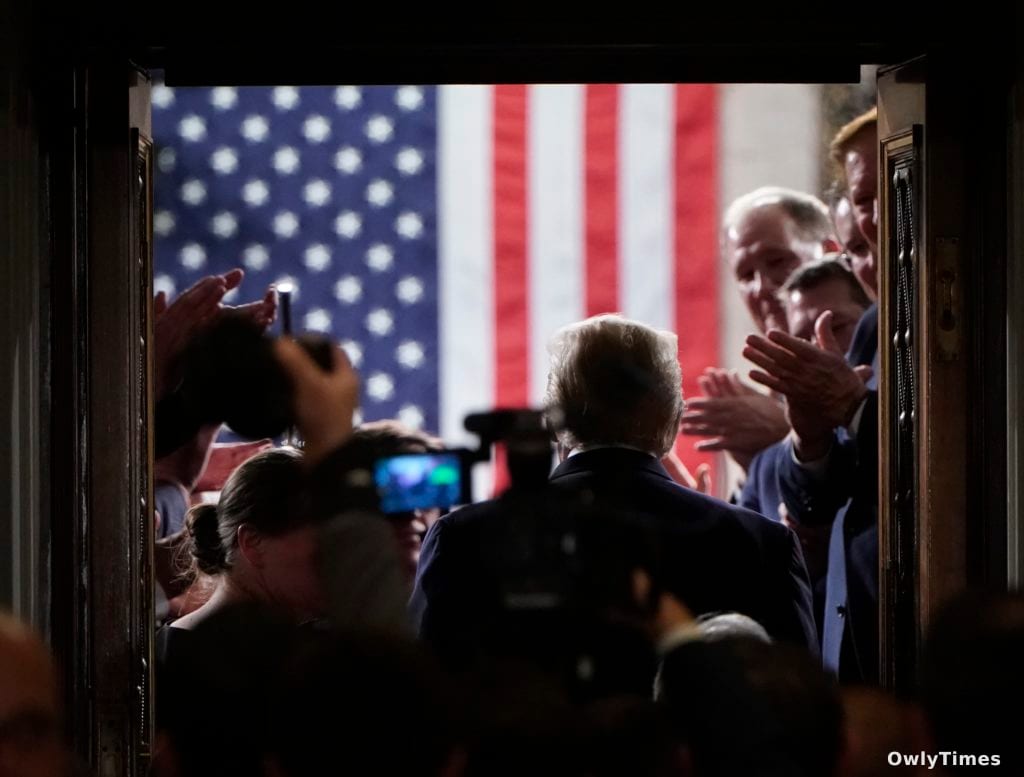

The strategic calculation behind President Donald Trump’s 2026 State of the Union address isn’t about persuasion – it’s about consolidation. Thirteen months into his second term, marked by aggressive deregulation, a historically high volume of executive actions, and ongoing internal crises, Trump isn’t aiming to win over new supporters. He’s reinforcing the base, signaling to the factions within his coalition where priorities lie, and attempting to reframe a narrative increasingly defined by setbacks. The address, scheduled for Tuesday, February 24th, is less a national report card and more a declaration of continued power, delivered against a backdrop of escalating political and legal challenges.
The Supreme Court’s Friday ruling against Trump’s sweeping tariffs is the most immediate pressure point. This isn’t simply a policy defeat; it’s a direct challenge to the President’s core economic nationalist agenda and a demonstration of institutional limits on executive power. The timing, just days before the address, forces Trump to either concede ground – a rare move – or double down on rhetoric that risks further alienating moderate voters already expressing uncertainty about his leadership. Public sentiment, while still favorable among his base, is demonstrably softening, and the tariff reversal underscores a pattern of judicial roadblocks to key policy initiatives. Who benefits and who loses here is clear: domestic industries reliant on tariff protection lose, while international trade partners and consumers potentially gain, but the larger loss is to Trump’s image of unwavering control.
See the original PBS story for the full account.
This dynamic is further complicated by the ongoing partial government shutdown stemming from the Department of Homeland Security funding impasse. The stalemate, fueled by Democratic opposition to Trump’s immigration enforcement policies, isn’t a new phenomenon – shutdowns have become a recurring feature of his presidency. However, the prolonged nature of this particular shutdown, and its direct impact on federal employees and border security, presents a tangible hardship that undercuts Trump’s claims of economic prosperity and national security. The parallel to the 1995-96 government shutdowns under President Bill Clinton is striking. Then, as now, a clash over budgetary priorities and ideological differences led to a protracted standoff, ultimately damaging the public’s trust in both parties. But unlike Clinton, who eventually negotiated a compromise, Trump appears less inclined toward concession, betting that public fatigue will eventually break the Democrats.
The shadow of the Jeffrey Epstein investigation continues to loom over the administration, a persistent vulnerability that Democrats are eager to exploit. While direct links to Trump remain unproven, the ongoing scrutiny and the involvement of key figures within his orbit create a narrative of moral compromise and potential obstruction of justice. This isn’t merely a legal issue; it’s a reputational one, feeding into broader concerns about the ethical standards of the administration. The contrast with the impeachment proceedings of President Andrew Johnson in 1868 is instructive. While the charges were different, both cases involved accusations of abuse of power and a deeply polarized political climate. The key difference is that Trump’s legal vulnerabilities are ongoing, providing a constant source of ammunition for his opponents.
The Democratic response, delivered by Virginia Governor Abigail Spanberger, is strategically designed to counter Trump’s narrative. Spanberger’s election in a traditionally Republican state last November signals a potential shift in momentum, and her vocal criticism of Trump positions her as a credible and articulate opponent. The planned counterprogramming – the “People’s State of the Union” rally and the “State of the Swamp” event – demonstrates a coordinated effort to bypass the official address and directly engage with the public. The decision by some Democrats, like Representative Chris Van Hollen and Senator Patty Murray, to boycott the speech altogether, opting instead to meet with constituents or participate in alternative events, underscores the depth of the opposition and the unwillingness of some to legitimize Trump’s presidency. House Minority Leader Hakeem Jeffries’ instruction for Democrats to attend with “silent defiance” or abstain entirely reveals a calculated attempt to project both respect for the institution and disapproval of the President.
The question isn’t whether Trump will deliver a message of strength and accomplishment – he almost certainly will. The critical political chess move to watch next is how he responds to the Supreme Court ruling and the ongoing shutdown. Will he attempt to negotiate a compromise, signaling a willingness to work with Democrats? Or will he escalate the conflict, further polarizing the country and risking a prolonged economic disruption? The answer to that question will reveal not only the future of his presidency, but also the trajectory of American politics for the next two years.