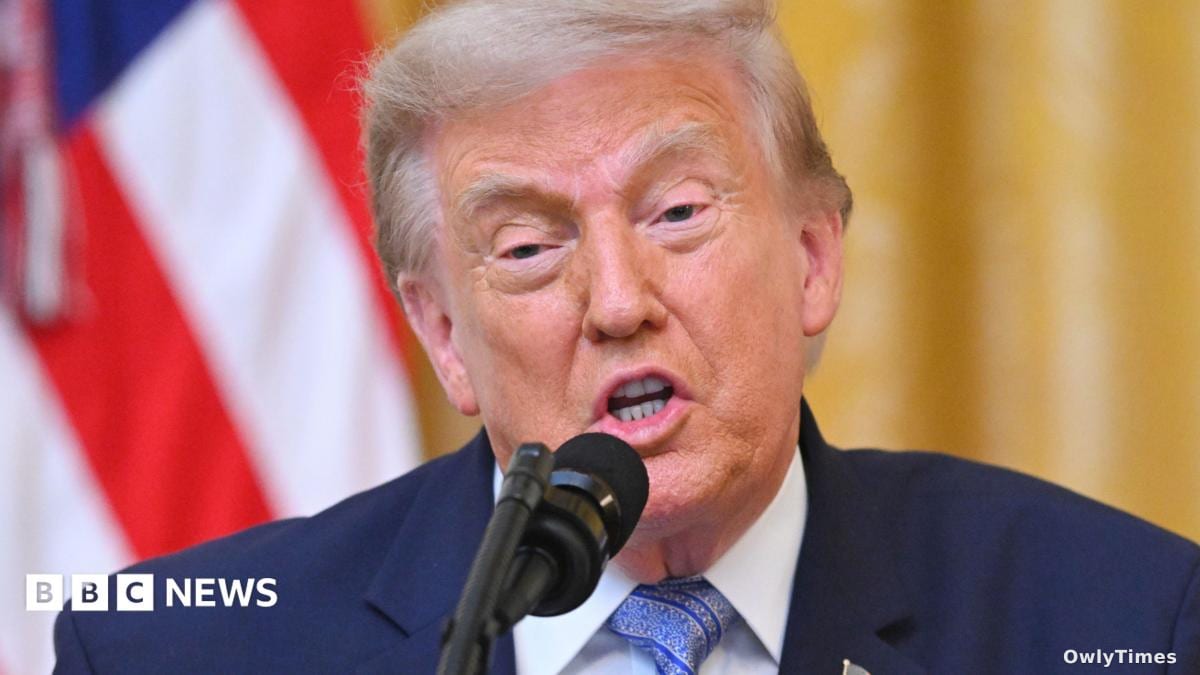

President Donald Trump’s primetime address from the White House on July 16, 2026, was a calculated maneuver to reframe the political battlefield ahead of the November midterm elections. By alleging that China engaged in a massive, covert effort to undermine the 2020 election—and that a "deep state" bureaucracy suppressed this intelligence—Trump is attempting to mobilize his base around the narrative of a rigged electoral system while pressuring Congress to pass the stalled SAVE America Act. This strategy seeks to shift the focus from his own declining approval ratings, which the BBC reports have dipped to 37%, toward a defensive posture where his party’s legislative agenda becomes the only safeguard against foreign subversion.
The strategic calculus here is clear: by casting doubt on the integrity of the ballot, Trump creates a political insurance policy against potential losses. As CNBC notes, the president faces a difficult electoral map where Democrats are favored to retake the House. By linking the "illicit acquisition of 220 million voter files" to an alleged internal cover-up, he aims to create a pretext for challenging future results. The beneficiaries are his core supporters, who gain a unifying theory for electoral grievances; the losers are the institutional norms of the U.S. intelligence community, which the president directly accused of "deliberately massaging" briefings, according to The Independent.
The claims presented in the speech rely on a mixture of declassified, heavily redacted documents and unverifiable assertions. Trump alleged that China’s activities included an attempt to manufacture illegal ballots for Joe Biden, a claim that directly contradicts a 2021 U.S. National Intelligence Council report. That report, cited by both the BBC and CNBC, stated with "high confidence" that China did not deploy interference efforts or seek to change the outcome of the 2020 election. The Independent further highlights that while the U.S. intelligence community did assess that Russia conducted influence operations to denigrate Biden and support Trump in 2020, the president omitted this historical context entirely.
This reliance on selective disclosure mirrors the political climate surrounding the 2008 financial crisis, where public distrust of institutional experts was leveraged to push for radical structural changes. Trump’s push for the SAVE America Act—which would mandate photo identification and proof of citizenship for registration—is presented as the only solution to these purported "shocking vulnerabilities." However, as CNBC points out, the bill currently lacks the necessary support to clear the Senate. His threat to withhold signatures from other legislation until this act reaches his desk serves as a classic pressure tactic to force his party into a unified stance before the midterms.
The immediate political fallout involves the president’s escalating war with the media. Trump explicitly called for the revocation of broadcast licenses for NBC and ABC for their refusal to air the speech live, a tactic intended to bypass traditional journalistic gatekeepers. As the midterms approach, the primary chess move to watch is whether the Republican-led Congress will risk further alienation of moderate voters by adopting the president’s rhetoric on election security, or if the stall in the Senate will force a shift in the administration’s legislative strategy. The signal to track remains the Department of Justice’s ongoing, though frequently dismissed, litigation across several states seeking access to voter registration records.